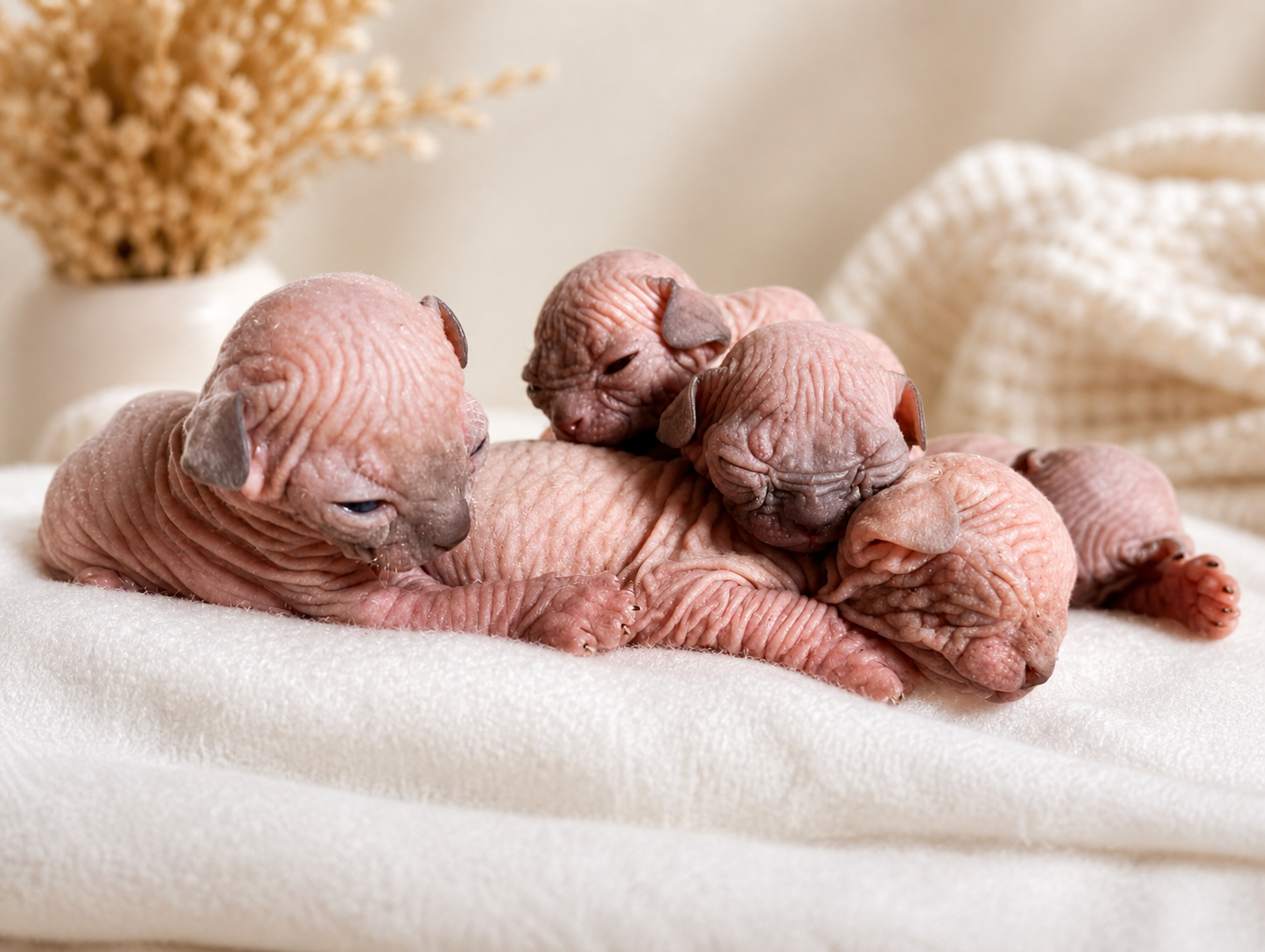
The Right Kitten Starts With the Right Breeder
Buying a Sphynx kitten is exciting, but it should never be rushed. The breeder you choose has a significant influence on your kitten's health, temperament, confidence, and early development. A responsible breeder does far more than simply produce kittens—they carefully plan each litter, provide excellent veterinary care, raise kittens in a clean and loving home, socialize them daily, educate buyers, and remain available after adoption.
Because Sphynx cats are highly social, intelligent, and require specialized care, giving them the right start in life is essential. Choosing a knowledgeable breeder greatly improves the likelihood of raising a healthy, confident, and affectionate companion.
This guide explains what to look for in a healthy Sphynx kitten, which questions to ask before reserving one, what documents you should receive, and the warning signs every buyer should know.
1. Look for a Kitten That Is Active, Alert, and Curious
A healthy Sphynx kitten should appear bright, active, and interested in its surroundings. While kittens naturally spend a lot of time sleeping, they should become playful, curious, and responsive when awake. A confident kitten usually enjoys gentle interaction and moves comfortably without signs of weakness or discomfort.
Healthy kittens should have clear eyes, comfortable breathing, clean skin, good muscle tone, and smooth movement. Be cautious if a kitten appears extremely thin, constantly hides, coughs, limps, struggles to breathe, or seems unusually weak.
Since Sphynx cats have little or no fur, their skin is easy to examine. Look for healthy skin that is free from sores, heavy crusting, unusual discharge, or strong odors. Minor scratches from littermates may occur during play, but persistent skin problems should be addressed before the kitten goes to its new home.
2. Ask for Veterinary Records
A responsible breeder should willingly provide complete veterinary records for every kitten. These records often include wellness examinations, vaccination history, deworming schedules, parasite prevention, and any medical treatments the kitten has received.
Ask when the kitten was last examined by a veterinarian and what follow-up care is recommended after adoption. Once your kitten arrives home, schedule your own veterinary visit to establish ongoing care and confirm that your new companion is healthy.
Be cautious if a breeder refuses to provide documentation, gives vague answers about veterinary care, or pressures you to purchase a kitten without proper records.
3. Ask About the Parents
The health and temperament of both parents play an important role in the development of every kitten. A responsible breeder should be happy to discuss the personalities, health history, and breeding goals for both the mother and father.
Although buyers may not always meet both parents—particularly if an outside stud was used—the breeder should still provide clear information about their health history and any health screening that has been performed.
Ask whether the parents have been evaluated for heart disease, hereditary conditions, skin issues, or other health concerns. Responsible breeders welcome these questions because informed buyers are more likely to provide excellent lifelong homes.
4. Understand HCM and Heart Screening
Hypertrophic Cardiomyopathy (HCM) is one of the most important health topics for Sphynx owners and breeders. HCM is a heart disease that causes the muscular walls of the heart to thicken, reducing the heart's ability to pump blood efficiently. While it can affect many breeds, responsible Sphynx breeders take heart health seriously.
Ask prospective breeders how they approach heart health. Many responsible breeders perform regular veterinary cardiology examinations or echocardiograms on their breeding cats. Although screening cannot guarantee that a kitten will never develop heart disease, it demonstrates a commitment to responsible breeding and long-term health.
Even after bringing your kitten home, regular veterinary checkups remain essential because some heart conditions may not show obvious signs during the early stages.
6. Avoid Kittens Sold Too Young
Kittens need adequate time with their mother and littermates to develop important social skills, confidence, grooming habits, and healthy play behavior. Removing a kitten too early may negatively affect both physical and emotional development.
Ask your breeder when kittens are allowed to go home and why they have chosen that timeline. A responsible breeder will ensure each kitten is eating independently, using the litter box consistently, and is physically and emotionally ready before joining a new family.
Waiting for the right kitten at the proper age is always better than rushing the adoption process.
7. Review the Health Guarantee and Contract
A professional breeder should provide a clear written contract and health guarantee. These documents help protect both the buyer and the breeder while explaining each person's responsibilities after adoption.
A contract may include health guarantees, veterinary requirements, spay or neuter agreements, breeding rights, return policies, care expectations, and other important information. Read every section carefully and ask questions if anything is unclear before placing a deposit or completing your purchase.
Be cautious of breeders who refuse to provide written agreements, avoid discussing their policies, or make unrealistic promises that seem too good to be true.
8. Look for Clean, Safe, Home-Raised Conditions
Healthy kittens should be raised in a clean, safe, and enriching environment. Living areas should be well maintained, free from strong odors, and provide clean food, fresh water, litter boxes, comfortable bedding, warmth, and plenty of opportunities for play and exploration.
Home-raised Sphynx kittens often benefit from daily interaction with people and exposure to normal household activities. These early experiences help them become confident, affectionate companions who adapt more easily to life with their new families.
If visiting the cattery is not possible, ask for recent photos, videos, or a live video call. A responsible breeder should be happy to show you the kitten, its surroundings, and answer your questions honestly.
9. Warning Signs of a Bad Breeder or Scam
Unfortunately, not every breeder has the kitten's best interests in mind. Be cautious if prices seem unrealistically low, photos appear copied from other websites, video calls are refused, or unusual payment methods are requested.
Other warning signs include breeders who cannot provide veterinary records, refuse to discuss the kitten's parents or health screening, avoid answering questions, or always have large numbers of kittens immediately available without any waiting list.
Responsible breeders usually ask buyers questions as well. They want to know about your home, experience with cats, lifestyle, and whether you understand Sphynx care. Their goal is to ensure every kitten is placed with the right family, not simply to make a quick sale.
10. Questions to Ask Before Reserving a Sphynx Kitten
Before placing a reservation, ask what food the kitten currently eats, what litter it uses, what grooming routine it has learned, when it was last examined by a veterinarian, what vaccinations and deworming treatments it has received, and whether the parents have undergone health screening.
You should also ask what type of support the breeder provides after adoption, what is included in the health guarantee, and whether a written contract is provided. A responsible breeder will gladly answer these questions and explain each part of the adoption process.
Questions Every Buyer Should Ask
- ✔ Has the kitten been examined by a veterinarian?
- ✔ What vaccinations and deworming has the kitten received?
- ✔ Have the parents undergone health screening?
- ✔ What food and litter is the kitten currently using?
- ✔ What does the health guarantee include?
- ✔ What support is available after adoption?
If you have children, dogs, other cats, or a particularly busy household, let the breeder know. Matching each kitten's personality with the right home helps create the best possible lifelong relationship.
Conclusion: Choose Health, Temperament, and Trust
A healthy Sphynx kitten is much more than beautiful—it should be well-socialized, veterinary examined, carefully raised, and supported by a responsible breeder who genuinely cares about every kitten's future.
Taking the time to choose the right breeder reduces unnecessary risks and gives your kitten the strongest possible start in life. Health, temperament, transparency, and lifelong support are all signs of a breeder who places the wellbeing of their cats above making a quick sale.
At Sphynx World Cattery, we proudly raise affectionate, healthy, family-ready kittens while providing honest guidance and continued support for every family that welcomes one of our kittens home.
Ready to Welcome a Loving Sphynx Kitten?
Explore our available Sphynx, Bambino, and Elf kittens, or contact Sphynx World Cattery to learn more about current and upcoming litters.
5. Socialization Is Not Optional
Early socialization plays a major role in shaping a kitten's confidence and personality. During the first weeks of life, kittens should experience gentle handling, normal household sounds, grooming routines, toys, litter training, and positive interactions with people.
Because Sphynx cats are naturally affectionate and people-oriented, daily interaction helps them develop into confident, friendly companions. Kittens raised in a loving home environment usually adjust more easily to their new families.
A responsible breeder begins socialization long before the kitten leaves for its forever home, making future grooming, veterinary visits, and family life much less stressful.